

Passive House Windows: What the Standard Actually Requires
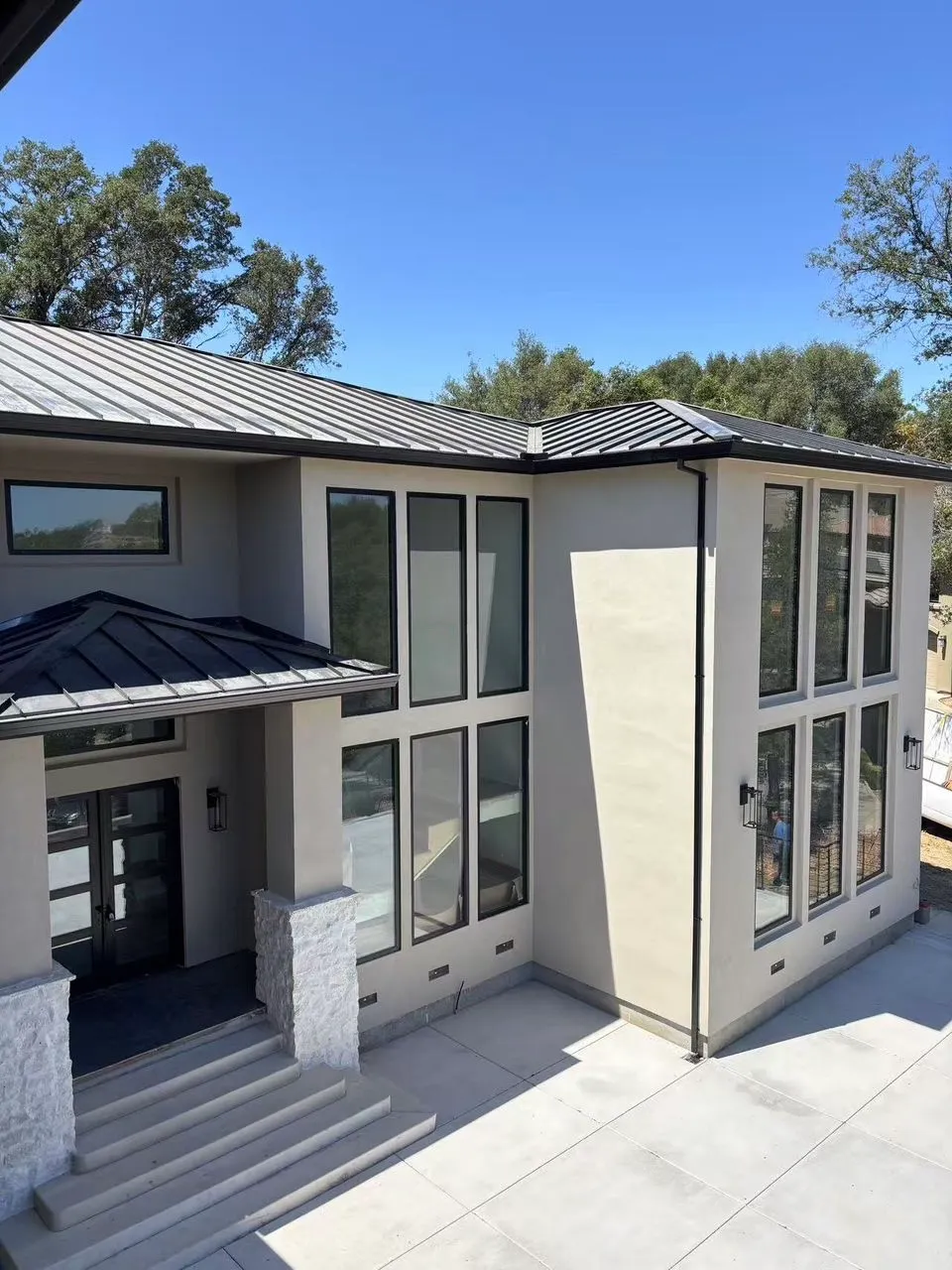
Passive House is one of the few places in the window market where “high performance” has an actual number attached to it. The standard doesn’t ask for a general impression of quality — it asks for a whole-window U-factor at or below roughly 0.14, an airtight assembly, and an installation that doesn’t leak the performance back out at the perimeter. Everything else follows from those requirements.
The U-factor threshold is the gate
The headline requirement is thermal: a whole-window U-factor in the neighbourhood of 0.14 (about 0.80 W/m²K), measured across glass and frame together rather than glass alone. That distinction matters more than it sounds. A spec sheet advertising a centre-of-glass number will always look better than the assembly it belongs to, and the assembly is what the energy model cares about. Our guide to high performance windows covers how the whole-window figure is put together.
Reaching that number essentially requires triple glazing, multiple Low-E coatings, an inert gas fill, warm-edge spacers, and a frame with a genuine thermal break. The glazing guide explains what each of those layers contributes.
Airtightness is the requirement nobody quotes
Air infiltration rate gets far less attention than U-factor and matters nearly as much. A window that leaks air under pressure loses conditioned air continuously, and no amount of glazing performance compensates for it. This is where the sealing mechanism decides the outcome: a multi-point locking sash pulls tight against the frame at several points around its perimeter, where a single-latch unit seals at one.
That is the practical reason tilt-and-turn windows are the default format in Passive House construction across Europe — the hardware is built around exactly this problem. European windows covers why the format developed the way it did.
Installation can undo the specification
A Passive House window installed with a thermal bridge at the perimeter does not perform like a Passive House window. The standard treats the installation detail as part of the specification rather than as a separate trade problem, which means the frame has to sit within the insulation layer rather than outboard of it, with the air barrier continuous across the junction.
This is the single most common way a compliant window fails to deliver its modelled numbers, and it is worth settling before the order rather than after delivery.
When the spec is worth it
Passive House remains a narrow niche in the US, and specifying to the full standard everywhere in a house is rarely the best use of the budget. The components — triple glazing, European multi-point hardware, thermally broken frames — are the same building blocks used across any high-performance window, just tuned further. Sizing them to your actual climate, orientation, and energy target gets most of the benefit for a fraction of the premium.
Where the full standard genuinely applies — a certified project, a severe climate, a net-zero energy target — it is worth doing properly, including the installation detail.
Where Bellevue fits
Bellevue’s standard glazing package already includes Low-E coating, argon fill, and warm-edge spacers, with triple glazing available where the climate or the energy model calls for it, and European multi-point hardware on every operable unit as standard rather than as an upgrade. Tell us the whole-window U-factor your project needs in a quote request and we’ll configure against that number rather than around it.
What is a Passive House window?
A window that meets the thermal and airtightness thresholds of the Passive House standard — broadly, a whole-window U-factor around 0.14 or lower (roughly U-value 0.80 W/m²K), triple glazing, a thermally broken frame, and an installation detail that avoids thermal bridging at the perimeter. It is a measured specification, not a product category any manufacturer can self-declare.
Can you open windows in a Passive House?
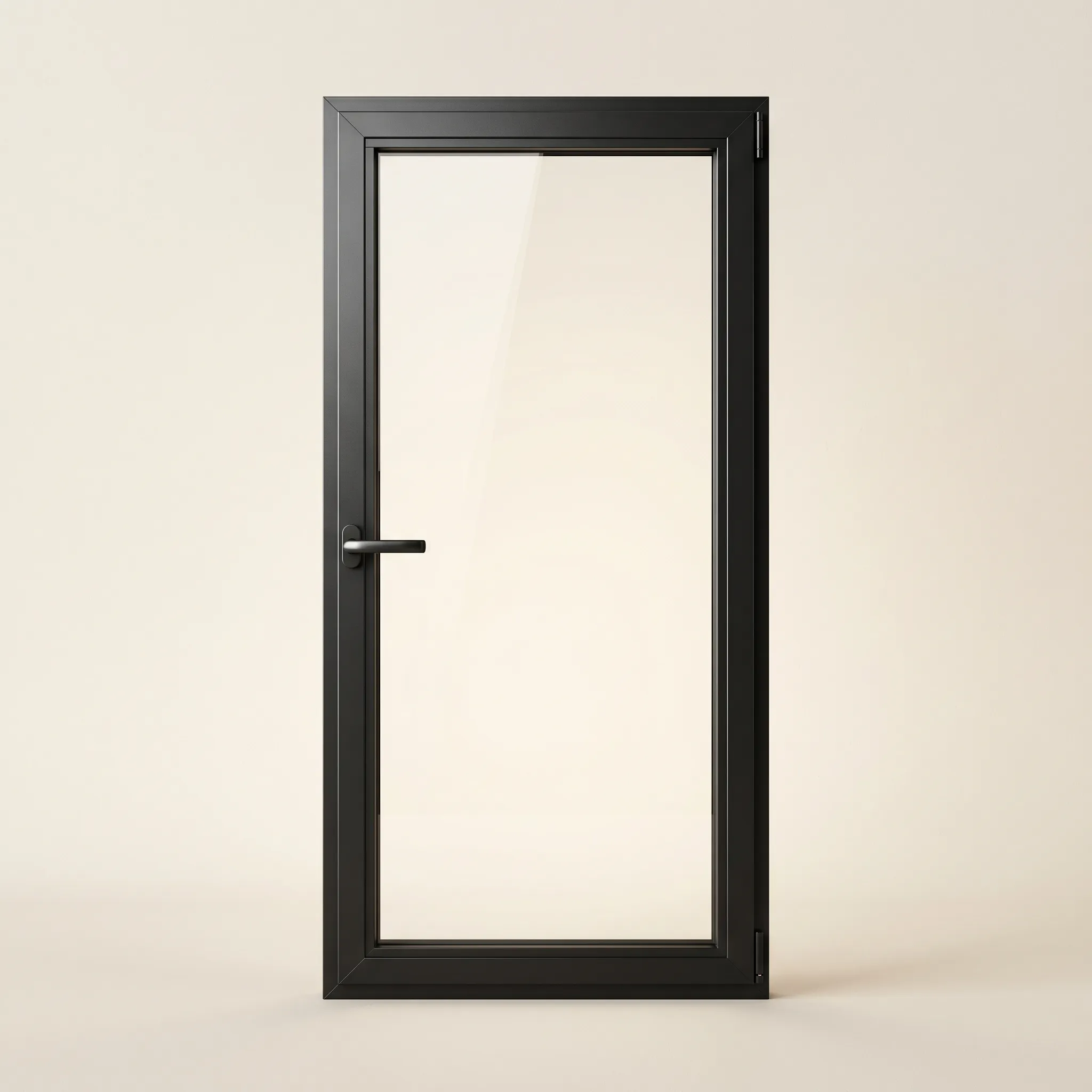
Yes. A Passive House is airtight by construction, not sealed shut, and operable windows are normal — tilt-and-turn is the most common format precisely because its multi-point hardware seals tightly when closed while still opening two ways. The ventilation system handles baseline air exchange; opening a window is a comfort choice rather than a violation of the standard.
How much do Passive House windows cost?
More than a standard double-glazed unit, because triple glazing, a thermally broken frame, and tighter manufacturing tolerances all cost more to build. The honest way to size it is against your actual climate and energy target rather than specifying the highest thermal grade everywhere in the house — the return on a north-facing wall differs sharply from a south-facing one.
How do you choose windows for a Passive House design?
Start from the whole-window U-factor your energy model requires, not the glass-only number a spec sheet may advertise. Then confirm the air infiltration rate, the frame's thermal break, and — critically — how the unit will be installed, since a compliant window fitted with a thermal bridge at the perimeter will not deliver the modelled performance.
Do Passive House windows have to be triple glazed?
In practice, in most climates, yes — the U-factor threshold is difficult to reach with double glazing regardless of coating and gas fill. Triple glazing is the usual route, combined with multiple Low-E coatings, argon or krypton fill, and warm-edge spacers.